


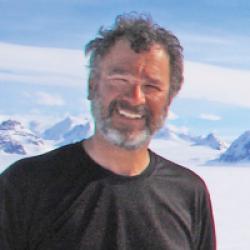
Ted Scambos is a Senior Research Scientist at the Earth Science Observation Center of the Cooperative Institute for Research in Environmental Sciences. His research interests include glaciology; remote sensing of the poles; climate change effects on the cryosphere; Antarctic history; geochemistry; and planetary science.
Scambos is a lead principal investigator for the Science Coordination Office of the International Thwaites Glacier Collaboration (SCO project). He and his team will integrate ITGC efforts for efficiency and effectiveness, foster wider scientific collaboration, and deliver crucial science outcomes to key stakeholders.
Scambos is also a co-investigator on the TARSAN project.
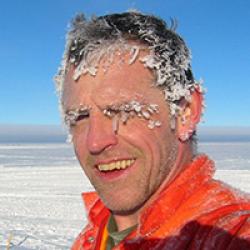
Professor David Vaughan was Emeritus Fellow and the former director of science at British Antarctic Survey with responsibility for the strategic development and excellence in scientific output of the Science teams employed by BAS. In 2017 he was made an Officer of the Order of the British Empire in recognition of his services to science.
Vaughan took the role as lead UK principal investigator for the Science Coordination Office (SCO) at the start of the ITGC program. He and his team integrate ITGC efforts for efficiency and effectiveness, foster wider scientific collaboration, and deliver crucial science outcomes to key stakeholders. After his retirement from BAS in 2021, as of spring 2022, Vaughan became Emeritus Principal Investigator for the program.
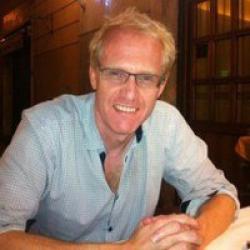
Hilmar Gudmundsson is a professor of glaciology and extreme environments at the University of Northumbria. His specific focus is on the future evolution of glaciers and ice sheets in a warming world.
Gudmundsson is a lead Principal Investigator on the PROPHET project. He and his team will combine existing computer simulations of ice and ocean near the Thwaites Glacier, to improve models to reduce the uncertainty in the projection of the glacier’s behavior and subsequent contribution to sea level rise in the future.
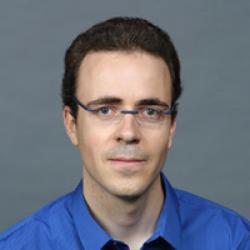
Mathieu Morlighem is a professor of Earth Sciences at Dartmouth College. His research interests are focused on better understanding and explaining ongoing changes in the cryosphere, as well as reducing uncertainties in the ice sheet contribution to sea level rise using numerical modeling. He is a co-founder of the Ice Sheet System Model, a new generation numerical model of ice sheet flow.
Morlighem is a lead Principal Investigator on the PROPHET project. He and his team will combine existing computer simulations of ice and ocean near the Thwaites Glacier, to improve models to reduce the uncertainty in the projection of the glacier’s behavior and subsequent contribution to sea level rise in the future.
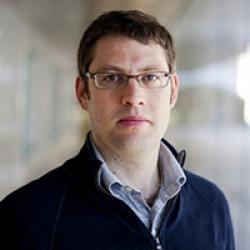
Jeremy Bassis is an associate professor at the University of Michigan. His research focuses on the complicated array of dynamic processes affecting ice sheet and glacier evolution, and how those ice bodies respond climate change—past, present, and future. One of the ice sheet processes that his research targets is improving our understanding of the mechanics of iceberg calving, a process that accounts for up to two-thirds of the mass discharged from the cryosphere to the ocean. This process has implications for century-scale sea level rise, and introduces a "fast" timescale into the response of the ice sheets to climate change, one that is not accounted for in numerical models.
Bassis is a lead Principal Investigator on the DOMINOS team. He and his team will use computer modelling to examine calving and associated processes that could cause the rapid retreat and collapse of the glacier.
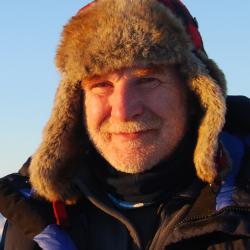
Doug Benn Chair of Environmental Change at St Andrews University. His interest in glaciers started in his teens as he hiked and climbed in the Scottish Highlands. He followed both climbing and scientific interests while pursuing his PhD on the Younger Dryas glaciers on the Isle of Skye. He has studied glaciers in Norway, Iceland, the Alps, North and South America, and the Himalaya.
Benn is a lead Principal Investigator on the DOMINOS team. He and his team will use computer modelling to examine calving and associated processes that could cause the rapid retreat and collapse of the glacier.
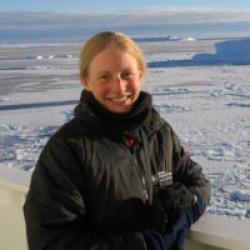
Joanne Johnson is a geologist and Antarctic scientist at the British Antarctic Survey. Her research interests include studying ice sheet change in Antarctica with exposure dating, and exploring feedbacks between glaciation, volcanism and climate in Antarctica.
Johnson is a lead Principal Investigator on the GHC project. By sampling bedrock beneath the ice sheet, she and her team will identify if and when the Thwaites Glacier retreated in the past, how it recovered, and how it is currently responding to environmental conditions.
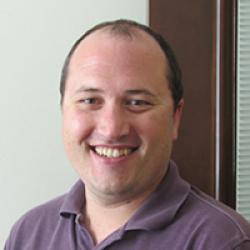
Brent Goehring is a researcher at the Los Alamos National Lab. His research interests include cosmogenic nuclides and surface exposure dating, glacial geology and geomorphology, paleoclimatology, and neotectonics.
By sampling bedrock beneath the ice sheet, he and his team will identify if and when the Thwaites Glacier retreated in the past, how it recovered, and how it is currently responding to environmental conditions.

Julia Wellner is Assistant Professor at the University of Houston. Her research interests include Antarctic Ice Sheet history since the Eocene, including geomorphic signatures of ice sheet retreat across the continental shelf, sedimentation patterns in fjords and their relation to oceanographic controls. She also studies Plio-Pleistocne sequence stratigraphy from three-dimensional seismic data, and Holocene climate of the Antarctic.
Wellner is a lead principal investigator on the THOR project. She and her team will investigate sediments deposited in the seas near the Thwaites Glacier, and reconstruct past changes in environmental conditions and the glacier's response, adding context to projections of future change.